Here's a sobering truth most baby boomers don't want to hear: there's a 70% chance you'll need long-term care at some point in your life.
That statistic isn't from some fear-mongering website. It comes directly from Genworth Financial, one of the largest long-term care insurance providers in the country. The federal government backs it up too. A 2019 paper from the U.S. Department of Health and Human Services states: "The prospect of becoming disabled and needing long-term services and supports is perhaps the most significant risk facing older Americans."
Think about that for a moment. The most significant risk you face isn't market crashes, inflation, or even serious illness. It's the very real possibility that you'll need help with daily activities like bathing, dressing, or eating—and that this help could cost you everything you've worked your entire life to build.
Yet most people are dangerously unprepared.
Why This Crisis Is Different From Anything Your Parents Faced
Your parents' generation had something you don't: affordable care and shorter lifespans.
Today, the numbers are staggering. According to research from the Urban Institute, men who need long-term care will need it for an average of 2.2 years. For women, that number jumps to 3.7 years.
And here's where it gets expensive.
In Minnesota, the average cost in 2024 for a shared nursing home room is $146,000 per year. That's $12,167 every single month. For a home health aide, you're looking at $96,096 annually. Even assisted living will run you $74,877 per year.
On Florida's Gulf Coast, a shared nursing home room averages $128,298 per year. A home health aide costs $82,368 annually, and assisted living runs $63,570.
Here's the kicker: these costs are rising faster than inflation. You can see the current costs in your specific area here.
Let's do some quick math. If you're a woman in Minnesota who needs nursing home care for the average 3.7 years, you're looking at over $540,000. And that's at today's rates, not what they'll be five or ten years from now.
The Dangerous Myths That Will Cost You Everything
Over my 30 years as an estate and elder law attorney, I've heard the same myths repeated thousands of times. These misconceptions have cost families millions of dollars and left surviving spouses broke.
Let's bust these myths right now.
Myth #1: "It Won't Happen to Me"
This is the most common—and most dangerous—myth of all.
People tell themselves they're healthy. They exercise. They eat right. Their parents lived independently until the end.
But the statistics don't lie. Seven out of ten people over 65 will need long-term care. That means it's more likely than not that you'll need it.
Think of it this way: if someone told you there was a 70% chance of a hurricane hitting your home, would you skip buying insurance? Of course not. Yet that's exactly what people do with long-term care planning.
Myth #2: "Medicare Will Cover It"
This might be the most expensive misunderstanding in America.
Medicare does cover skilled nursing care for up to 100 days following a qualifying hospital stay. But there are two huge problems with this:
First, it only covers skilled care—the kind you need immediately after surgery or a major medical event. It does not cover custodial care, which is help with daily activities like bathing, dressing, eating, and using the bathroom. This custodial care is what most people actually need.
Second, even skilled care coverage ends at 100 days. What happens on day 101? You're on your own.
I can't tell you how many families I've worked with who thought they were protected, only to discover their Medicare coverage ended right when they needed it most.
Myth #3: "I Have Long-Term Care Insurance, So I'm Fine"
Long-term care insurance can be part of the solution, but it's rarely the complete answer.
Not everyone qualifies for it—if you have pre-existing conditions, you might be denied. Many people can't afford the premiums, which have been rising dramatically. Others buy policies but can't afford to keep them when premiums increase. And in many cases, the coverage simply isn't enough.
Let me share a real example. I once worked with a woman named Barbara who was convinced she didn't need to worry about long-term care planning because she had insurance. She felt completely protected.
When we sat down and reviewed her policy, here's what we found: it paid $4,000 per month and was capped at two years of coverage.
I had to explain to her that the average cost of a nursing home in Minnesota was $12,000 per month, and the average length of stay for a woman was almost four years.
Her insurance would cover only one-third of her monthly costs, and it would run out at the halfway point of her likely care needs. She would still need over $400,000 out of pocket.
Barbara nearly cried. She thought she had done everything right.
How Middle-Class Families Are Actually Paying for Care
So if Medicare doesn't cover it and insurance often isn't enough, how are people paying for long-term care?
There are really only three ways:
Option 1: Use Your Own Savings
This is the path most people end up on by default. You write checks month after month, watching your life savings evaporate.
At $12,000 per month in Minnesota, a couple with $500,000 in savings would be broke in less than three and a half years. Everything they worked for—gone. Often leaving the healthy spouse with almost nothing to live on for the rest of their life.
Option 2: Long-Term Care Insurance
As we discussed, this can help, but it's not available to everyone, not affordable for everyone, and rarely covers everything.
Option 3: Government Benefits (Medicaid)
Here's what most people don't know: the number one way middle-class families are covering long-term care costs is through Medicaid.
Not Medicare. Medicaid.
But here's the catch: the government wants you to spend down almost all of your assets before you qualify.
In Minnesota, you generally need to be below $3,000 in countable assets. In Florida, it's $2,000. Yes, you read that correctly—you have to be nearly broke to qualify.
Some assets don't count toward this limit, like your primary home (with certain equity limits) and one vehicle. But most of your savings, investments, and other property must be spent down first.
And even then, there's another trap: federal law requires states to recover assets from your estate after you pass away to pay back the government for benefits you received. This is called "estate recovery."
So even if you protect some assets during your lifetime, the state can come after them when you're gone—potentially leaving nothing for your children.
More Dangerous Myths About Protecting Your Assets
When people start to understand the crisis they're facing, they often jump to solutions that seem logical but can actually make things worse.
Myth #4: "My Will or Trust Will Protect My Home and Savings"
I hear this all the time: "I have a trust, so my assets are protected."
Unfortunately, that's not how it works.
A will or trust is an estate planning tool. It controls what happens to your assets after you die. It's excellent for avoiding probate and making sure your assets go to the right people.
But it does absolutely nothing to protect your assets from long-term care costs while you're alive.
Why? Because you still own the assets. They're still in your name (or your trust's name, which is legally the same thing). Medicaid looks at what you own, and if you're over the asset limit, you don't qualify for benefits.
Having a will or trust without elder law planning is like having a great estate plan for assets that won't exist because they were spent on care.
Myth #5: "I'll Just Give Everything to My Kids"
This seems like the obvious solution, right? If Medicaid only covers you when you're broke, just give everything to your kids now. Or sell your house to them for $1.
Here's the problem: Medicaid has a 60-month "look-back period."
That means when you apply for Medicaid benefits, they look at every financial transaction you made in the previous five years. Any transfer for less than fair market value triggers a penalty period during which you're ineligible for benefits.
The penalty is calculated based on the amount you transferred divided by the average monthly cost of care in your state. If you gave away $300,000 and the monthly cost of care is $10,000, you'd be ineligible for 30 months—even though you no longer have the money.
I've seen families in absolute crisis because of this. Mom needs care now, but she gave assets to the kids two years ago thinking she was being smart. Now she doesn't qualify for Medicaid, doesn't have the money to pay for care, and the kids can't afford to give it back or pay for her care themselves.
Myth #6: "This Kind of Planning Is Illegal or Unethical"
Some people think that protecting assets from long-term care costs is somehow gaming the system or cheating.
Nothing could be further from the truth.
Federal law specifically provides for strategies and tools to protect your home and savings from long-term care costs. These planning strategies are built into the Medicaid rules themselves.
Think about it this way: wealthy Americans use the tax code to minimize estate taxes through legal planning strategies. That's not cheating—it's smart planning using the rules Congress created.
Elder law planning is the same thing, except it's designed for middle-class families. The government created these rules, and you have every right to use them.
However—and this is critical—the rules are highly technical and must be carefully followed. One mistake can trigger penalties that leave you ineligible for benefits when you need them most.
The Solution: Elder Law Planning
This is where elder law planning comes in.
Elder law planning uses specific legal strategies and tools—like Medicaid-compliant trusts, strategic asset repositioning, spousal protection techniques, and more—to help you qualify for the care you need while protecting your home and life savings.
But here's what's important to understand: elder law planning is different from estate planning.
Many people think they're covered because they worked with an attorney to create a will or trust. And that's great—estate planning is essential.
But estate planning and elder law planning solve different problems:
- Estate planning determines what happens to your assets after you die and helps you avoid probate
- Elder law planning protects your assets from long-term care costs while you're alive
Just because you worked with an estate planning attorney—even a really good one—doesn't mean you have elder law planning in place. Many estate planning attorneys don't practice in this specialized area at all.
It's like the difference between a family doctor and a cardiologist. Both are excellent doctors, but you need the right specialist for your specific problem.
Why You Need to Act Now
Here's the uncomfortable truth: the best time to do elder law planning is before you need care.
Remember that 60-month look-back period? The strategies we use to protect assets are most effective when implemented well in advance of needing care.
But even if you're facing an immediate crisis—even if you or your spouse just entered a nursing home—there are still strategies that can help. You haven't missed your window completely. However, your options become more limited the longer you wait.
Every month you delay is another month of exposure. Another month where a sudden health crisis could wipe out everything you've built.
Take the Next Step to Protect What You've Built
For nearly 30 years, I've helped families in Minnesota and Florida protect their homes and life savings from the devastating costs of long-term care.
I've been interviewed by USA Today, Live Life Large, Money Matters, and other national media. I teach continuing education to attorneys, financial professionals, and even government agencies like the IRS and Treasury Department. I've written multiple books on this topic.
But here's what matters most: I've helped thousands of families sleep better at night knowing their life's work is protected, no matter what the future holds.
If you're between 60 and 82, own your home, and have assets you want to protect, we should talk.
During your consultation, we'll:
- Review your specific situation and concerns
- Explain exactly how you're exposed under current law
- Show you the strategies available to protect your home and savings
- Create a custom plan designed for your unique circumstances
- Answer all your questions in plain English
Call us today at either (941) 909-4644 for our Florida office or at (763) 420-5087 for our Minnetonka, Minnesota office to schedule your consultaiton. Or, you can also fill out the contact form on this page and a member of our team will reach out to schedule a time that works for you.
Would You Like to Discover More?
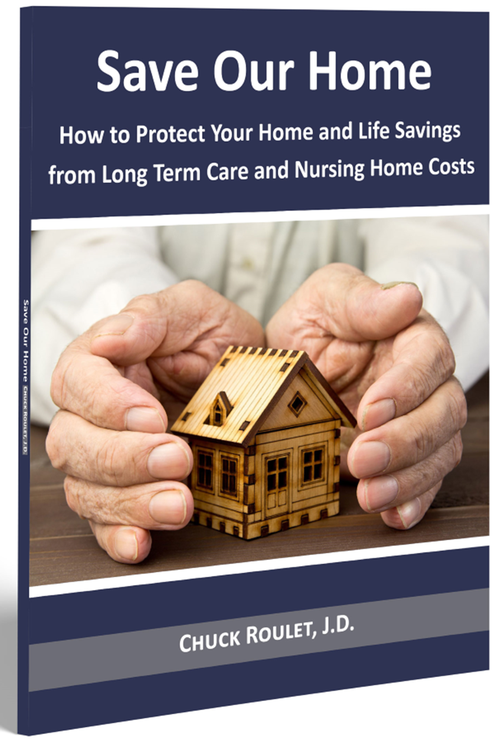
 Download your free copy of my guide: "Save Our Home: How to Protect Your Home and Life Savings from Long-Term Care and Nursing Home Costs" by clicking here.
 Join us in my exclusive online masterclass where I reveal the strategies I use with my private clients to help them protect their home and life savings. Click here to sign up.
Don't let the long-term care crisis become your family's financial catastrophe. The planning you do today could save your family hundreds of thousands of dollars and protect everything you've worked your entire life to build.
The question isn't whether you'll need long-term care. Statistics say you probably will.
The real question is: will you be ready?