By Chuck Roulet, Estate and Elder Law Attorney | Licensed in Florida and Minnesota
This is one of the most common questions I hear from adult children who are watching both parents decline. And the honest answer is: it depends on the situation. Sometimes the home is protected. Sometimes it is not. And sometimes it is protected today but at risk tomorrow.
Here is a plain-English breakdown of each scenario.
When One Spouse Remains at Home
If one spouse is in a nursing home or long-term care facility and the other spouse still lives in the family home, the home is protected under federal Medicaid law. Medicaid cannot force a sale of the home while the community spouse — the one who remains at home — is living there.
This protection is real and meaningful. But it comes with a catch that most families do not know about.
The state is tracking every dollar of Medicaid benefits paid for the institutionalized spouse. When the institutionalized spouse passes away, the state does not immediately come after the home — because the community spouse is still living there. But when the community spouse also passes away, the state can file a claim against the estate to recover what Medicaid paid. The family home may need to be sold to satisfy that claim.
The home is protected during the community spouse’s lifetime. It is not necessarily protected after.
When Both Spouses Are in a Nursing Home
If One Spouse Has an Intent to Return Home
If both spouses are in a facility but one genuinely expects to return home — following rehabilitation, recovery, or a temporary placement — the home may retain its protected status under Medicaid rules. The intent to return is a recognized legal standard in both Minnesota and Florida.
However, the Medicaid estate recovery lien still applies in this scenario. The home being temporarily protected does not erase the state’s right to recover benefits after both spouses have passed.
If Neither Spouse Can Return Home
This is the scenario that puts the home at greatest risk. If neither spouse has a realistic intent to return home — because of advanced dementia, permanent physical decline, or a placement in memory care — the home loses its protected status under Medicaid rules.
At that point, Medicaid treats the home as an available asset. It must generally be spent toward the cost of care before Medicaid will pay. For many families in this situation, the home must be sold — often quickly and under difficult circumstances.
|
The five-year look-back matters here. |
|
|
|
Any transfer of the home — including placing it into a trust — made within five years before a Medicaid application can trigger a penalty period during which Medicaid benefits are denied. This is why protecting the home must happen years before a care crisis arrives, not after. |
Can the Home Ever Be Protected Even When Both Spouses Need Care?
Yes — but the strategies that work depend entirely on timing. A Medicaid Asset Protection Trust, funded at least five years before a Medicaid application, can remove the home from the reach of both Medicaid asset rules and estate recovery. When properly structured, parents can continue living in the home during their lifetimes, and the home is preserved for the next generation even if both spouses eventually need care.
For a complete breakdown of how this works — including the specific rules in Minnesota and Florida and the planning strategies available at each stage — read our full guide: “What Happens When BOTH Spouses Need a Nursing Home?” [LINK TO PILLAR ARTICLE]
Ready to Protect Your Family? Call Us Today.
Whether you are watching your parents age and trying to get ahead of what is coming, or you are already in the middle of a care crisis — a conversation with an experienced elder law attorney is the most important step you can take right now. There is no obligation and no pressure. Just a clear picture of what is still possible for your family.
Florida Office (Venice, FL): 941-909-4644
Minnesota Office (Minnetonka, MN): 763-420-5087
Or fill out the contact form on this page and a member of our team will reach out to schedule your consultation.
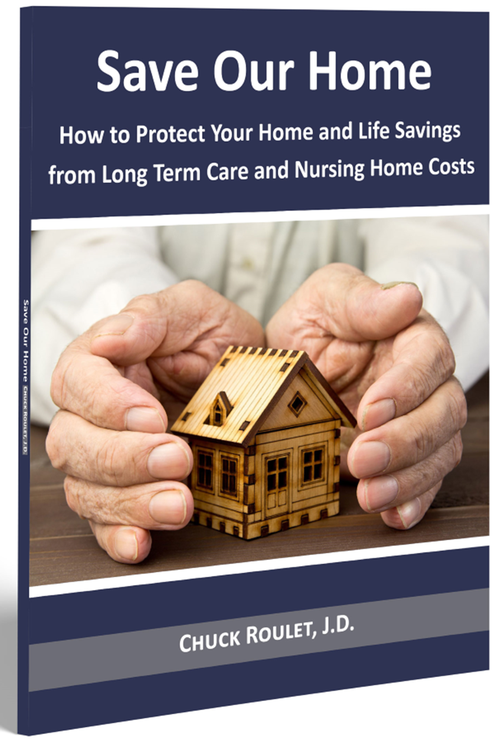
Free Resource: Download “Save Our Home”
Our free guide walks through exactly how families use legal planning to protect their home and savings from long-term care and nursing home costs — including strategies most families never hear about until it is too late.
Click here to download your free copy: [INSERT GUIDE LINK]
Free Online Masterclass
Register for our free masterclass to learn how to protect your home and savings from long-term care costs, avoid probate, reduce estate taxes, and protect what you leave for your children from divorce and creditors.
Click here to register: [INSERT MASTERCLASS LINK]
For a complete breakdown of every scenario and planning strategy, read our full guide: “What Happens When BOTH Spouses Need a Nursing Home?” [LINK TO PILLAR ARTICLE]
Related FAQs: FAQ 2: Does a revocable trust protect the home from Medicaid in Minnesota? [LINK] | FAQ 3: Does a revocable trust protect the home from Medicaid in Florida? [LINK]
Roulet Law Firm, P.A. | Licensed in Florida and Minnesota | Nearly 30 Years of Experience | rouletlaw.com
This page is for informational purposes only and does not constitute legal advice. Please consult with a licensed attorney regarding your specific situation.