By Chuck Roulet, Estate Planning and Elder Law Attorney | Roulet Law Firm, P.A.
For most families, the home is everything.
It is where the kids grew up. Where holidays happened. Where life happened. It is often the single biggest asset a parent owns — and the one thing they most want to protect and pass on to their family.
So when I sit down with a client and ask what their biggest concern is, I often hear some version of the same thing:
"I don't want the house to go to a nursing home. And I don't want it tied up in court when I'm gone."
Completely understandable. Completely reasonable. And unfortunately, the steps most families take to solve this problem are the very steps most likely to make it worse.
In nearly 30 years of practice — helping families in both Minnesota and Florida — I have seen the same painful mistakes play out over and over again. A well-meaning parent follows advice from a friend, reads something online, or uses a cheap online service, thinking they've taken care of things. Then something goes wrong. And by the time they find their way to my office, the damage is already done.
This article is about the three most dangerous planning mistakes I see families make with the family home — and what actually works. If you have aging parents, or if you are a parent who wants to protect what you have built, please read every word. This information could save your family tens of thousands of dollars and years of heartache.
The #1 Misunderstanding in Estate Planning: 'We Have a Will, So We're Fine' |
If I had a dollar for every time I heard this. . .
A will is better than nothing. But if your goal is to protect the family home from probate and make sure it passes smoothly to your family, a will alone will not get the job done. Not even close.
Here is what most people do not know:
|
A will does NOT avoid probate. It goes through probate. Your will is a set of instructions for the court. When you pass away, someone has to take that will to a probate court, file it, and ask the court to supervise the distribution of your estate. That process is called probate — and it is exactly what most people are trying to avoid. Probate is public. Anyone can look up what you owned, what you owed, and who received what. If you value privacy, probate is your enemy. Probate is expensive. Attorney fees, court costs, and personal representative fees can easily run 3–5% of your estate's value — or more. On a $400,000 home, that is $12,000 to $20,000 out of your family's pocket. Probate takes time. In Minnesota, a straightforward probate often takes 9–18 months. In Florida, it is similar. Probate does nothing to protect the home from nursing home costs. The court process happens after you pass away — it has no bearing on what Medicaid can claim during your lifetime or at your death. |
I want to be clear: I am not saying wills are worthless. They serve an important purpose. But if you believe that having a will means your family is protected — from probate, from nursing home costs, from the home getting tied up in court — you have been given incomplete information.
The good news is that there are better tools. Let's talk about them.
Trusts Are Not Just for the Wealthy — And Here's Why That Matters |
When most people hear the word "trust," they picture old money. Rockefellers. Billionaires. People with multiple homes and offshore accounts.
That is a myth — and it is one that has cost ordinary families dearly.
A trust is simply a legal arrangement where you transfer ownership of your assets to a "trustee" — usually yourself, while you are alive — who manages them according to your instructions. When you pass away, your successor trustee distributes the assets to your beneficiaries, with no court involvement, no public record, and no probate.
That is it. That is the core benefit. And it is available to anyone.
Two Types of Trusts You Need to Know About
There are two main types of trusts that come up in home protection planning. Understanding the difference is critical.
|
Revocable Living Trust |
Medicaid Asset Protection Trust |
|
|
|
An Important State-by-State Note In Florida, a revocable trust can protect your homestead property from Medicaid estate recovery — as long as the home qualifies as homestead and the equity is within the state's limits. This is a meaningful protection for many Florida families. In Minnesota, a revocable trust does NOT protect the home from Medicaid spend-down or estate recovery. Minnesota has enhanced estate recovery rules that reach beyond probate assets — which means that even assets in a revocable trust can be subject to a Medicaid claim after your passing. If you are in Minnesota and concerned about nursing home costs, a Medicaid Asset Protection Trust is worth a serious conversation. This is exactly why cookie-cutter online plans often fail. The right tool depends on your state, your situation, and your goals. |
Now let's talk about what families do when they don't have a proper plan in place — because the workarounds are often far more dangerous than doing nothing at all.
|
The 3 Most Dangerous DIY Moves Families Make with the Family Home |
When people don't have a plan — or when they are trying to avoid the cost of working with an attorney — they tend to reach for one of three "shortcuts." I have seen all three cause serious, sometimes irreversible damage to families I care about.
Dangerous Move #1: Putting Your Kids on Title to the Home
This is by far the most common DIY home-planning mistake I see. The thinking goes like this: "If I put my kids on the deed, the house doesn't have to go through probate when I die, and it won't be at risk if I need nursing home care."
Both assumptions are wrong — and the consequences can be devastating.
Here is what actually happens when you put a child on title to your home:
- You have made a gift. For tax purposes, you have given your child a partial interest in your home. That gift may need to be reported, and it can trigger gift tax issues depending on the value.
- Your child does not get a step-up in basis. When someone inherits property at death, the tax basis of that property "steps up" to the fair market value at the date of death. That means if your child inherits the home and sells it, they owe little or no capital gains tax. But if you give it to them while you are alive — including by adding them to the deed — they receive your original cost basis. When they sell, they pay capital gains taxes on the full amount of appreciation. On a home that has been owned for decades, that tax bill can be enormous.
- Your child's problems become your problems. If your child gets divorced, gets sued, faces creditor claims, or files for bankruptcy, their interest in your home is now at risk. You did not intend to give your son-in-law or daughter-in-law an interest in your home. But that is exactly what you did under both Minnesota and Florida law — because in both states, spouses obtain a marital interest in property owned by their spouse, even if they are not listed on the deed.
- It may not even protect the home from nursing home costs. A transfer to a child is subject to Medicaid's 60-month look-back period. If you need Medicaid within five years of making the transfer, it could disqualify you from benefits you would otherwise have been entitled to.
|
|
FROM CHUCK'S FILES "Why Didn't Anyone Tell Me?" I once received a call from a woman who had been referred to me by her daughter's divorce attorney. When she came in, I asked what brought her into my office. She explained that her daughter was getting divorced and it was the attorney who suggested she come to see me. She handed me a stack of paperwork and court filings. I explained that her son-in-law's attorney was threatening a partition action — a lawsuit to force the sale of jointly owned property. She didn't know what that was, so I explained it. She was adamant: "He can't do that." It turned out that, based on advice from a friend or something she had read online, she had added her daughter to the title of her home. I explained that when she did that, she had also — under Minnesota law — given her son-in-law an interest in the property. She pushed back: "I only added my daughter." She even showed me the deed. Her son-in-law's name was nowhere on it. I had to explain that it didn't matter. Under Minnesota law, when her daughter became a co-owner of the property, her husband obtained a marital interest in it — even without being named on the deed. He had a legal right to seek his share of that interest as part of the divorce proceedings. I told her I didn't think his attorney would follow through and that this was probably being used as leverage. But the right was real. And as long as her daughter and son-in-law were married, he would need to sign off on any sale or refinancing of that home. She sat quietly for a moment. Then she asked: "Why didn't anyone tell me this before I did it?" That question stayed with me. It is the reason I never recommend putting children on title to any real property or other assets. If they get divorced, sued, or face any other legal trouble — their issues become your issues. |
Dangerous Move #2: Giving the Home Away — or 'Selling It for $1'
The thinking here is similar: "If I give the house to my kids, or sell it to them for a dollar, it's out of my name. Medicaid can't touch it. And it avoids probate."
Let me take these one at a time.
|
Does it avoid probate? Yes — if the home is out of your name when you pass away, it does not go through your probate estate. That part is technically true. |
|
Does it protect the home from nursing home costs? Not if done within 60 months of applying for Medicaid. The look-back period means Medicaid will review the last five years of your financial transactions. If you transferred the home during that window, it could be treated as a disqualifying transfer — and you could be denied benefits you would otherwise have been entitled to, sometimes for months or even years. |
|
What about the tax consequences? This is where it really gets painful. When you give your home to your children — or sell it for $1 — they receive your original cost basis in the property. Let's say you bought the home 30 years ago for $80,000 and it is now worth $450,000. Your children's basis is $80,000. When they sell it, they owe capital gains tax on $370,000. That is a massive, entirely preventable tax bill. If instead they had inherited the home at your death through a properly designed trust, their basis would "step up" to $450,000 — the value at the date of your death. In many cases, they would owe little or nothing in capital gains tax when they sell. The $1 sale is not a clever trick. It is a gift — and the IRS treats it that way. Depending on the value, it may also require filing a gift tax return. |
Dangerous Move #3: Transfer on Death Deeds (MN) and Lady Bird Deeds (FL) — The 'Quick Fix' That Often Isn't
In Minnesota, homeowners can use a Transfer on Death Deed (TODD) to name a beneficiary who will receive the property at death — without probate. In Florida, the equivalent tool is called a Lady Bird Deed (also known as an Enhanced Life Estate Deed). Both are widely marketed as simple, inexpensive ways to avoid probate and protect the home.
Both have serious limitations that most people are never told about.
Here is what these deeds do well:
- They avoid probate for the property named on the deed.
- They are relatively inexpensive to create and record.
- You retain control of the property during your lifetime and can revoke them.
Here is what they do not do:
- They do not protect the home from Medicaid estate recovery. In Minnesota especially, Medicaid's enhanced estate recovery rules can reach assets that pass outside of probate — including through a TODD. In Florida, a Lady Bird Deed does not protect the home from Medicaid estate recovery unless the property qualifies as homestead and meets equity limits.
- They do not protect your beneficiaries from their own problems. When a beneficiary inherits property through a TODD or Lady Bird Deed, that property becomes part of their estate — subject to their creditors, their divorce proceedings, and their lawsuits. A properly designed trust can build in protections for your beneficiaries that these deeds simply cannot provide.
- They can create conflict among heirs. If you name multiple beneficiaries, they inherit the property jointly — and their spouses may obtain an interest under state law. Getting everyone to agree on what to do with the property, and getting every necessary signature, can become a serious problem.
- They cover only real estate. A TODD or Lady Bird Deed does nothing for your bank accounts, investment accounts, vehicles, or personal property. Those assets still need a plan.
I have written in detail about the dangers of Transfer on Death Deeds on my website. If you want to go deeper on this topic, I encourage you to read Transfer on Death Deeds vs. Trusts: Why a Trust May Be Better and The Hidden Dangers of Transfer on Death Deeds: What You Need to Know. The Lady Bird Deed has its own set of issues specific to Florida law that I will cover in a dedicated article coming soon.
The bottom line: both tools are frequently misunderstood and overused — often sold as a cheaper alternative to doing a proper plan. They can be appropriate in specific, limited circumstances. But they are not a substitute for comprehensive planning, and relying on them as if they are can leave your family exposed in ways you never intended.
What Actually Works: Matching the Right Tool to the Right Goal |
Now that we have covered what does not work — let's talk about what does.
There is no single answer that fits every family. The right plan depends on your state, your assets, your health, your family situation, and your goals. But here is a framework that applies to most families I work with:
Goal #1: Avoid Probate and Keep the Estate Private
The right tool is a revocable living trust — and funding it properly. This means transferring your home, your bank accounts, your investment accounts, and your other significant assets into the trust. When you pass away, your successor trustee distributes everything according to your instructions. No court. No public record. No probate delays.
A properly funded revocable trust also gives you the ability to protect the assets you leave for your children in the event they get divorced, face a lawsuit, or encounter other legal trouble — if the trust is designed with those protections built in.
Goal #2: Protect the Home from Nursing Home Costs — Florida
In Florida, a revocable trust can protect your homestead property from Medicaid estate recovery — as long as the home qualifies as homestead and the equity is within the applicable limits. For many Florida families, a well-designed revocable trust accomplishes both goals at once: it avoids probate and provides meaningful protection from estate recovery.
However, it is important to understand that a revocable trust does not protect the home from spend-down during your lifetime. If you need Medicaid to pay for nursing home care in Florida, the home may still need to be counted depending on your specific circumstances and the type of care you need. This is where proper planning — before a crisis — makes an enormous difference.
Goal #3: Protect the Home from Nursing Home Costs — Minnesota
Minnesota is a different story — and it is one that surprises many people, including those who have already done some planning.
Minnesota has some of the most aggressive Medicaid estate recovery rules in the country. The state can recover not just from your probate estate — but from assets that pass outside of probate as well. That includes assets in a revocable trust. Simply having a revocable trust is not enough to protect the home from Medicaid in Minnesota.
The tool designed specifically for this purpose is the Medicaid Asset Protection Trust, or MAPT. A MAPT is an irrevocable trust — meaning once you put assets into it, you give up direct control. But you can retain the right to live in the home, and income generated by the trust assets can still be paid to you. Most importantly, assets in a properly designed MAPT are not countable for Medicaid purposes — and they are protected from Medicaid estate recovery.
The critical catch: the MAPT must be in place at least 60 months (five years) before you apply for Medicaid. This is Medicaid's look-back period. If you transfer assets into a MAPT within that five-year window, it could delay or disqualify your eligibility.
|
The Most Important Thing I Can Tell You The time to do this planning is not when a health crisis hits. It is not when a parent is already in a nursing home. It is now — while you are healthy, while you have options, and while the clock on the look-back period can still run in your favor. I have had clients come to me too late. The MAPT could have protected everything — but the five-year window had already closed. The home had to go toward care costs. It did not have to happen that way. Please do not wait. |
Why I Practice Elder Law — A Personal Story |
I want to share something personal with you, because I think it explains why this work matters so much to me.
My grandparents lost their home — and everything they had saved — to a nursing home. Not because they didn't have a plan. But because Minnesota was not following federal law at the time. My grandfather was a World War II veteran. He had worked hard his entire life. By the time he found out what had happened, everything was gone — including a small home he had inherited from his brother.
He wept.
I'll never forget it. And it is a large part of why I do this work — to make sure other families do not go through what my family went through.
The tools exist to protect the family home. They exist to protect life savings. They are not complicated, and they are not just for the wealthy. But they have to be put in place before a crisis. That is the one thing I cannot stress enough.
Frequently Asked Questions |
Does a will protect my home from probate?
No. A will is a set of instructions for the probate court. The home — and all other assets in your name alone — must still go through probate. The will tells the court who should receive those assets, but the court process still happens. Trusts are the primary tool used to avoid probate.
Can I just add my kids to the deed to avoid probate and protect the home?
This is one of the most common mistakes I see. Adding children to the deed does avoid probate — but it also makes them co-owners immediately. Their interest in the home is subject to their creditors, their divorce proceedings, and their lawsuits. Under both Minnesota and Florida law, their spouses obtain a marital interest in the property even if not listed on the deed. It may also trigger capital gains tax issues and Medicaid look-back problems. In most cases, a trust is a far safer option.
Does a revocable living trust protect my home from nursing home costs in Minnesota?
No. In Minnesota, a revocable trust does not protect the home from Medicaid spend-down during your lifetime, and it does not protect from Medicaid estate recovery after your passing because Minnesota's enhanced recovery rules reach beyond probate assets. If protection from long-term care costs is your goal in Minnesota, a Medicaid Asset Protection Trust — put in place at least 60 months before you need Medicaid — is the right tool.
What about Transfer on Death Deeds in Minnesota or Lady Bird Deeds in Florida?
These deeds avoid probate for the specific property named on them — but they have significant limitations. They do not protect beneficiaries from their own legal problems, they do not provide meaningful protection from Medicaid in most circumstances, and they only cover real estate. They are frequently oversold as a cheap alternative to a full estate plan. I have written in depth about the risks of Transfer on Death Deeds on my website and will be publishing a detailed article on Lady Bird Deeds shortly.
How far in advance do I need to do this planning?
The sooner the better — but the specific answer depends on your goals. To protect assets from Medicaid spend-down using a Medicaid Asset Protection Trust, the trust must be in place at least 60 months (five years) before you apply for Medicaid. Planning done today starts that clock running. Waiting until a health crisis hits often means the options are severely limited or gone entirely.
|
The Question I Hear Most Often — And the Answer That Changes Everything |
After nearly 30 years of doing this work, there is one question I hear more than any other. It comes at the end of a first meeting, after I have walked a family through what their current plan does — and doesn't — do. After they understand what was at risk that they didn't know about.
They look at me and they ask: "Why didn't anyone tell me this before?"
I do not have a satisfying answer to that question. What I can tell you is this: you are reading this now. You know what most families don't. And the options to protect your home — done properly, done in time — are real.
The family home does not have to go through probate. It does not have to go to a nursing home. It does not have to be lost to a child's divorce or creditor problem. But protecting it requires the right tools, put in place at the right time, by someone who understands both the law and what your family actually needs.
If you are ready to have that conversation, I am here.
Call us today to schedule a consultation to discuss your planning goals at (941) 909-4644 for our Florida office or at (763) 420-5087 for our Minnetonka, Minnesota office. Or you can fill out the contact form on this page and a member of our team will reach out to you to schedule.
If you would like to discover more, here are some additional resources for you:
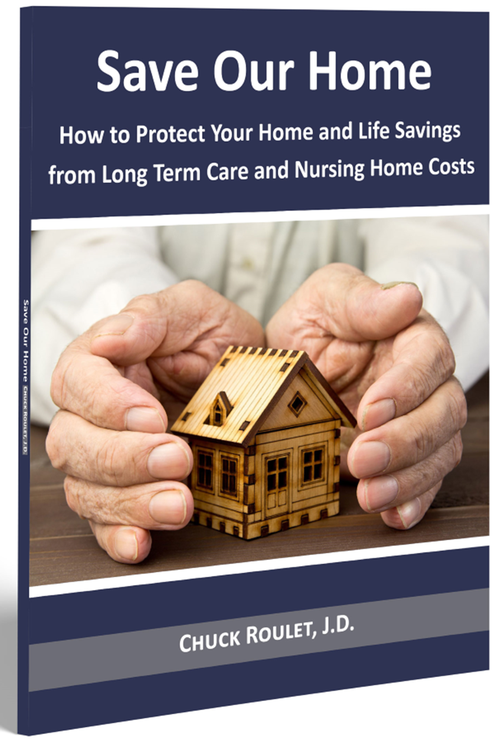
 Download your copy of my guide "Save Our Home: How to Protect Your Home and Life Savings From Long-Term Care and Nursing Home Costs". Click here to get your copy.
 Join us in my upcoming masterclass where I reveal strategies I use with my private clients to help them protect their home and life savings from long-term care and nursing home costs. Click here to register.
LEGAL DISCLAIMER: The information in this article is for educational purposes only and does not constitute legal advice. It does not create an attorney-client relationship. Estate planning and Medicaid law vary significantly by state and individual circumstance. Please consult a qualified attorney licensed in your state before making any planning decisions.