By Chuck Roulet, Estate Planning & Elder Law Attorney | Licensed in Florida & Minnesota | Nearly 30 Years of Experience | About Chuck →
|
Quick Answer The One Big Beautiful Bill Act, signed into law on July 4, 2025, made significant changes to Medicaid that will directly affect seniors in Florida and Minnesota who may need nursing home care. The most important change for homeowners: starting January 1, 2028, the maximum home equity you can have and still qualify for Medicaid long-term care will be capped at $1 million — with no future adjustments for inflation. Starting January 1, 2027, retroactive Medicaid coverage is also being cut — from 90 days to just 30 days for some applicants and 60 days for others. These changes affect families in both states — but the rules in Minnesota and Florida differ in important ways that make dual-state planning more important than ever. |
A Story That Puts This in Human Terms
Three weeks ago I sat across from a couple in their early sixties in Minnesota. He had just retired. She was planning to retire later this year. They had spent thirty years building a financial plan with a financial advisor — saving carefully, executing diligently, doing everything right.
During our meeting, he had to stop several times to hold back tears.
His wife had just been diagnosed with early onset dementia.
They had planned their entire retirement around spending it together — their children, their grandchildren, the life they had worked so hard toward. Now all of that was uncertain. And on top of the fear and the grief, they were facing something they hadn't planned for at all: no estate plan, no long-term care insurance, and the very real possibility that her illness could wipe out everything they had built over thirty years.
A new federal law just changed the Medicaid rules in a way that makes their situation — and situations like theirs across both Florida and Minnesota — more urgent than most families realize. Here is what you need to know.
Why Medicaid Matters More Than Most People Think
If you or a loved one might ever need nursing home care — and statistically, 70% of Americans over 65 will need some form of long-term care — Medicaid is likely the program that will eventually pay for it. Medicare only covers up to 100 days of skilled nursing care after a qualifying hospital stay. After that, you are on your own until your assets are spent down to Medicaid eligibility levels.
The cost of that care is substantial in both states. According to the 2025 Genworth Cost of Care Survey:
• Southwest Florida: private nursing home room $164,250/year; shared room $129,575/year
• Minneapolis, Minnesota: private nursing home room $153,665/year; shared room $146,000/year
Those costs come directly out of your savings, your home equity, and your retirement accounts — unless you have a plan. And the rules governing how Medicaid works — and how to protect assets from it — are different in Florida and Minnesota in ways that matter enormously for families with ties to both states.
What the Law Actually Changes — And When
1. The Home Equity Cap: Effective January 1, 2028
This is the most significant change for homeowners in both states.
Under current law, both Florida and Minnesota allow you to keep your home and still qualify for Medicaid long-term care — as long as you intend to return home or a spouse or dependent relative lives there. Florida's current home equity limit is approximately $730,000. Minnesota's is similar.
Under the new law, starting January 1, 2028, the maximum home equity limit is capped at $1 million nationally — and that cap will never be adjusted for inflation.
|
⚠️ The couple described above has a home and a cabin in Minnesota, along with retirement and investment accounts — all built over thirty years. The five-year Medicaid lookback period means the clock on protecting those assets started running the day she was diagnosed. Not in 2028. Right now. Every month of delay is a month of protection lost. |
The tools to protect your home remain available in both states — including Medicaid Asset Protection Trusts and, in Florida, Lady Bird Deeds — but they require advance planning. Florida's five-year lookback period means that protective transfers must be done years before a nursing home stay.
2. Retroactive Coverage Cut: Effective January 1, 2027
Under current law, when someone applies for Medicaid while already in a nursing home, Medicaid can cover up to 90 days of costs before the application date. Under the new law, starting January 1, 2027:
• For expansion adults: retroactive coverage drops from 90 days to 30 days.
• For traditional Medicaid applicants — including most elderly nursing home residents: retroactive coverage drops from 90 days to 60 days.
In real dollars, families could face 30 to 60 days of unexpected nursing home costs — potentially $10,000 to $27,000 out of pocket — simply because the application was not started in time. This applies in both Florida and Minnesota.
3. State Budget Pressure: Ongoing
The One Big Beautiful Bill Act cuts approximately $911 billion from Medicaid over ten years. When federal funding decreases, states face a difficult choice: fill the gap or cut services. Both Florida and Minnesota rely heavily on federal Medicaid funding. The trend toward reduced federal support makes advance planning more important in both states.
How Minnesota and Florida Differ — And Why That Matters
While the federal changes apply in both states, the existing Medicaid rules in Minnesota and Florida are meaningfully different — and those differences significantly affect planning strategy.
• Minnesota has more aggressive Medicaid estate recovery rules than Florida. Minnesota recovers from a broader range of assets and uses an expanded definition of estate — meaning more of what you own can be subject to recovery after death.
• In Florida, a revocable living trust is a powerful tool that helps protect assets and keep them out of probate. In Minnesota, a revocable trust does NOT protect from long-term care costs — a Medicaid Asset Protection Trust is required instead.
• Lady Bird Deeds are available in Florida to protect the home from Medicaid estate recovery. However, we do NOT recommend them and you can click here to see read why. Minnesota uses Transfer on Death Deeds, which do not offer the same level of protection under Minnesota's expanded estate recovery rules.
• Families who split time between both states — or who own property in both states — need planning that addresses both sets of rules simultaneously. A plan that works in Florida may not protect Minnesota assets, and vice versa.
|
The Dual-State Planning Advantage Roulet Law Firm, P.A. is one of the only firms in the country with active elder law and estate planning practices in both Florida and Minnesota. For families with ties to both states — whether snowbirds, recent transplants, or those with property or family in both — having an attorney who can see both sides of the equation is the only way to ensure your planning is actually complete. |
What Has NOT Changed
The five-year lookback period has not changed in either state. Medicaid eligibility asset limits are unchanged. Medicaid Asset Protection Trusts, Lady Bird Deeds in Florida, Personal Services Contracts, Qualified Income Trusts, and spousal protection strategies all remain available. Medicaid planning is not over — the urgency has increased, but the tools are still there for families who act in time.
What Florida and Minnesota Families Should Do Right Now
• If you own a home in Florida and are over 60 — talk to an elder law attorney about whether a Medicaid Asset Protection Trust or Lady Bird Deed makes sense for your situation.
• If you own a home or cabin in Minnesota — even if you now live in Florida — the five-year lookback clock is running on those Minnesota assets too. Minnesota's aggressive estate recovery rules make planning especially urgent.
• If you have a parent or loved one who may need nursing home care in either state — do not wait for a crisis.
• If you or a loved one is already in a nursing home — call an elder law attorney immediately. The reduced retroactive coverage window makes timing more critical than ever.
• If you recently moved to Florida from Minnesota or another state — your existing documents may not protect you the way you think they do. Florida and Minnesota rules are different. Plans drafted in one state may fail in the other.
• If you split time between both states — make sure your planning addresses both sets of rules. A Florida-only plan leaves Minnesota assets exposed. A Minnesota-only plan leaves Florida assets at risk.
A Word About Timing
The most common thing we hear from families who come to us after a crisis is: I wish we had done this sooner. The best time to plan was five years ago. The second best time is today.
Call us today to schedule a consultation at either (941) 909-4644 for our Florida office or at (763) 420-5087 for our Minnetonka, Minnesota office. Or you can fill out the contact form on this page and a member of our team will reach out to you. The conversation is confidential. And the sooner we talk, the more options your family will have.
If you would like to discover more, here are some additional resources:
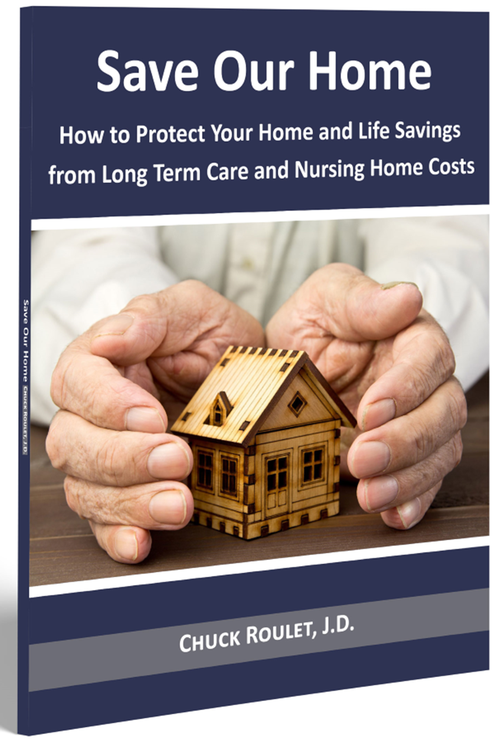
 Download your copy of my guide, Save Our Home. How to Protect Your Home and Life Savings from Long-Term Care and Nursing Home Costs. Click here to get your copy.
 Join us in my upcoming masterclass where I reveal strategies I use with my private clients to help them protect their home and life savings from long-term care and nursing home costs. Click here to sign up.
About the Author
Chuck Roulet is an estate planning and elder law attorney licensed in both Florida and Minnesota, with nearly 30 years of experience counseling families ranging from those protecting a modest home to multi-generational estates in excess of $10 million.
He is the founding attorney of Roulet Law Firm, P.A., with offices in Venice, Florida and Minnetonka, Minnesota — one of a small number of attorneys in the country licensed in both states who practices exclusively in estate planning, elder law, and long-term care planning.
Chuck has trained more than 35,000 attorneys, CPAs, and financial professionals as a nationally recognized continuing legal education speaker — including IRS and U.S. Treasury representatives. He is the author of three books including The Florida Snowbird Guide and the annual consumer guide Save Our Home, and has been featured in USA Today, The Epoch Times, Money Matters, Live Life Large, and other national publications.
Chuck's commitment to elder law is personal. His grandparents lost their home, their savings, and their dignity to a nursing home because Minnesota was not following federal law at the time. His grandfather — a World War II veteran — wept when he learned that everything, including the small home he had inherited from his brother, was gone. That experience drives everything Chuck does for his clients.
📞 Florida Office (Venice): 941-909-4644 | Minnesota Office (Minnetonka): 763-420-5087 | rouletlaw.com
Legal Disclaimer
This article is for general informational purposes only and does not constitute legal advice. Reading this article does not create an attorney-client relationship. Laws vary by state and individual circumstances differ. Please consult a qualified attorney licensed in your state regarding your specific situation.