By Chuck Roulet, Estate and Elder Law Attorney | Licensed in Florida and Minnesota
It was a Friday evening when Sandra called our office. She had just come from the hospital where her father Jim had been admitted after a fall and a broken hip.
Jim had been caring for her mother Betty at home. Betty had Alzheimer’s. She could not be left alone. And now Jim was in a hospital bed facing weeks of rehabilitation — and possibly a nursing home of his own.
“What happens to Mom?” Sandra asked. “And what happens to their house?”
If you are reading this, there is a good chance someone in your family is asking the same question right now. Maybe one parent just had a health crisis. Maybe both have been declining and the reality is finally setting in. Maybe a sibling forwarded you this article.
Whatever brought you here — here is what actually happens, and what you can still do about it.
The Scenario Most Families Never Plan For
Most families have thought about one parent needing care. Almost none have thought through what happens when both do.
According to the U.S. Department of Health and Human Services, approximately 70 percent of Americans over age 65 will need some form of long-term care in their lifetime. For a married couple, that means both spouses needing care at some point — whether at the same time or years apart — is not a remote possibility. It is a genuine probability.
And the costs are staggering. According to the 2025 Genworth Cost of Care Survey, a private nursing home room in Minneapolis averaged $168,630 per year. In southwest Florida, it was $164,250. Two private rooms — $328,500 to $337,260 every year. Over three years, that is over a million dollars.
Families who have not planned for this are often blindsided not just by the cost, but by what happens to the home.
What Actually Happens to the Home — Depends on the Scenario
1. One spouse is in a nursing home, one spouse is still at home.
This is the most common situation families face first. The good news: federal Medicaid law protects the home while the community spouse — the one who remains at home — is living in it. Medicaid cannot force a sale of the home.
But here is what most families do not know. The state is keeping a running tab of every dollar of Medicaid benefits it pays. When the institutionalized spouse passes away and then the community spouse passes away, the state can file a claim against the estate to recover those costs. The children who expected to inherit the family home may find it must be sold instead.
This is called Medicaid estate recovery. It is legal, it is common, and — with the right planning done early enough — it is almost entirely preventable.
2. Both spouses are in a nursing home, but one intends to return home.
If one spouse genuinely expects to return home — following a rehabilitation stay or a temporary placement — the home may retain its protected status under Medicaid rules. But the estate recovery lien still applies. The home being temporarily protected does not erase the state’s right to recover benefits after both spouses have passed.
3. Neither spouse can return home.
This is the hardest scenario. If neither spouse has a realistic intent to return home — because of advanced dementia, significant physical decline, or a permanent memory care placement — the home loses its protected status entirely.
At that point, Medicaid treats the home as an available asset. It must be spent toward the cost of care before Medicaid will pay a dollar. For many families, this means selling the home quickly — under painful circumstances, sometimes while both parents are still alive.
The Minnesota vs. Florida Difference — and Why It Matters for Snowbirds
If your parents have ties to both states — a Florida home and a cabin or property up north — this is the part you especially need to read.
Florida limits Medicaid estate recovery to assets that pass through probate. A properly structured revocable living trust can keep the Florida home outside of that recovery process. That is genuinely useful protection — but it only covers the Florida home.
Minnesota has enhanced estate recovery. The state’s recovery rights extend beyond probate to assets held in a revocable trust. A revocable trust does not protect a Minnesota property from Medicaid estate recovery. To protect that lake cabin or northern property, it typically needs to go into an irrevocable Medicaid Asset Protection Trust — funded at least five years before a Medicaid application.
I have worked with many families who had done careful planning for their Florida assets and had no idea the Minnesota property was completely exposed. And if your parents ever move back to Minnesota for care — to be closer to family as their health declines — Minnesota’s enhanced recovery rules apply from that point forward, regardless of how everything was originally set up under Florida law.
Want the Full Picture?
This post covers the core scenarios and the Minnesota-Florida distinction. If you want a complete breakdown — including the five-year Medicaid look-back, the specific strategies available at each stage, what spousal protections apply under federal law, and real planning stories — we have written a comprehensive guide that covers all of it.
Read our full guide here: “What Happens When BOTH Spouses Need a Nursing Home?” — it includes detailed cost breakdowns for both Minnesota and Florida, a plain-English explanation of the legal tools available, and the scenarios most families never think to plan for.
Ready to Talk? Call Us Today.
Whether you are watching both parents age and trying to get ahead of what is coming, or you are already in the middle of a care crisis and looking for answers — a conversation with an experienced elder law attorney is the most important step you can take right now. Call us today at either (941)-909-4644 for our Florida office or at (763)-420-5087 for our Minnetonka, MN office.
Or fill out the contact form on this page and a member of our team will reach out to schedule your consultation.
Get Our Free Guide
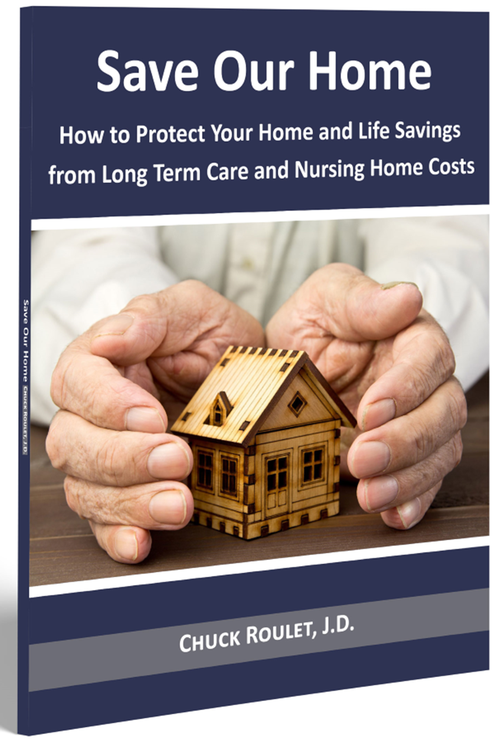
 We have put together a free guide called “Save Our Home: How to Protect Your Home and Life Savings From Long-Term Care and Nursing Home Costs.” It walks through exactly how families use legal planning to protect their assets from nursing home costs — including strategies most families never hear about until it is too late.
Click here to download your free copy.
Download it, share it with your siblings, and share it with your parents tonight.
Free Online Masterclass
 If you want to go even deeper — on how to protect your home and savings from long-term care costs, avoid probate, reduce estate taxes, and protect what you leave for your children from divorce and creditors — register for our free online masterclass by clicking here.
Free Online Masterclass
 Join us in my upcoming masterclass where I reveal strategies I use with my private clients to help them avoid probate, save on taxes, protect the money they leave for their kids in the event they get divorced and much more. Click here to sign up.
Roulet Law Firm, P.A. | Licensed in Florida and Minnesota | Nearly 30 Years of Experience | rouletlaw.com
About the Author
Chuck Roulet is an estate and elder law planning attorney at Roulet Law Firm, P.A., with offices in Minnetonka, Minnesota and Venice, Florida. He is licensed in both states and has nearly 30 years of experience helping families protect their homes, life savings, and legacies. He has been featured in USA Today, CNN, The Epoch Times, and other national media, and is the author of several books including The Florida Snowbird Guide.
This post is for informational purposes only and does not constitute legal advice. Please consult with a licensed attorney regarding your specific situation.