By Chuck Roulet, Estate and Elder Law Attorney | Licensed in Florida and Minnesota
The family home is almost always the most emotionally significant — and often the most financially valuable — asset a parent owns. It is the place where memories live. For many families, it is also the inheritance they have been counting on.
So when a parent needs nursing home care, one of the first questions adult children ask is: can they take the house?
The answer requires understanding two separate but related concepts — and most families only know about one of them.
While Your Parent Is Alive: The Home Is Usually Protected
When your parent enters a nursing home and applies for Medicaid long-term care benefits, the family home is generally exempt from Medicaid's asset limit — meaning Medicaid will not count it as an asset that must be spent down before benefits begin.
This protection applies as long as your parent intends to return home, or in many states as long as a spouse, minor child, or disabled child is living in the home. In Florida and Minnesota, the primary residence is specifically protected as an exempt asset during the Medicaid applicant's lifetime.
So while your parent is alive and on Medicaid, the nursing home cannot force a sale of the family home. The home remains in your parent's name and is not directly seized.
After Your Parent Passes Away: Medicaid Estate Recovery
Here is where most families are blindsided — and where the real financial risk lives.
After a Medicaid recipient passes away, the state has the right to file a claim against their estate to recover what Medicaid paid for their care. This is called Medicaid estate recovery, and it is required by federal law in all states.
In practical terms, this means that after your parent dies, the state can file a lien against the family home and require that the proceeds from its eventual sale be used to reimburse the Medicaid program for the cost of care. In cases where a parent spent years in a memory care facility at $10,000 or more per month, the Medicaid recovery claim can easily exceed the value of the home.
How Medicaid Estate Recovery Works in Florida
Florida's Medicaid estate recovery program files claims against the probate estate of a deceased Medicaid recipient. Assets that pass outside of probate — through a properly structured trust, for example — may not be subject to recovery. Florida also recognizes certain hardship exemptions that can sometimes reduce or waive recovery claims.
How Medicaid Estate Recovery Works in Minnesota
Minnesota has one of the broader Medicaid estate recovery programs in the country. It can pursue recovery against both probate and certain non-probate assets. Minnesota also has a broader definition of "estate" for recovery purposes than many other states. This makes advance planning to protect the family home especially important for Minnesota families.
How to Protect the Family Home Before It Is Too Late
There are several legal strategies that can protect the family home from Medicaid estate recovery — but they must be implemented before a Medicaid application is filed, and ideally years in advance because of the five-year lookback period.
Medicaid Asset Protection Trust
Transferring the home into a properly structured Medicaid Asset Protection Trust — an irrevocable trust designed specifically for this purpose — removes the home from your parent's estate for Medicaid recovery purposes. Your parent can often continue to live in the home and retain the homestead tax exemption, but the home is no longer subject to estate recovery after death. Assets transferred to this trust must be outside the five-year lookback window at the time of the Medicaid application.
Lady Bird Deed (Enhanced Life Estate Deed)
In Florida, a Lady Bird Deed — also called an enhanced life estate deed — allows a property owner to transfer their home to their children or other beneficiaries automatically at death, while retaining full control of the property during their lifetime. Because the transfer happens at death rather than during life, it does not trigger a Medicaid lookback penalty. Florida's Medicaid program does not currently subject Lady Bird Deed transfers to estate recovery claims, making this a powerful and frequently used tool for protecting the family home.
However, Lady Bird Deeds do come with risks and tradeoffs and so I do not recommend them. If you would like to discover more about why I do not recommend them, you can read my article by clicking here.
Spousal Transfer
In cases where a married person enters a nursing home, transferring the home solely into the community spouse's name can provide protection in certain circumstances. An elder law attorney can advise on whether this strategy is appropriate and how to structure it correctly.
What If My Parent Is Already on Medicaid?
If your parent is already receiving Medicaid benefits, the options for protecting the home from estate recovery are more limited — but they are not always gone. Certain hardship waivers and exemptions may apply, and some states allow post-eligibility planning in limited circumstances. An elder law attorney can advise on what remains possible.
The Bottom Line
A nursing home cannot take your parent's home while they are alive and on Medicaid. But Medicaid estate recovery means the state can file a claim against the home after your parent passes away to recover what it paid for care. The time to protect the family home is before care begins — ideally at least five years before a Medicaid application is filed.
For a complete guide to protecting your parent's home and savings from long-term care costs — including every tool available in Florida and Minnesota — read our full guide by clicking here.
Or for immediate action steps, read our blog post: "Mom Has Dementia and No Estate Plan? Do These 7 Things Now" by clicking here.
Ready to Protect Your Family? Call Us Today.
If your family is facing this situation right now, the most important step you can take is a conversation with an experienced elder law attorney. There is no obligation and no pressure — just clear answers about what is still possible for your family.
Florida Office (Sarasota County, FL): 941-909-4644
Minnesota Office (Minnetonka, MN): 763-420-5087
Or fill out the contact form on this page and a member of our team will reach out to schedule your consultation.
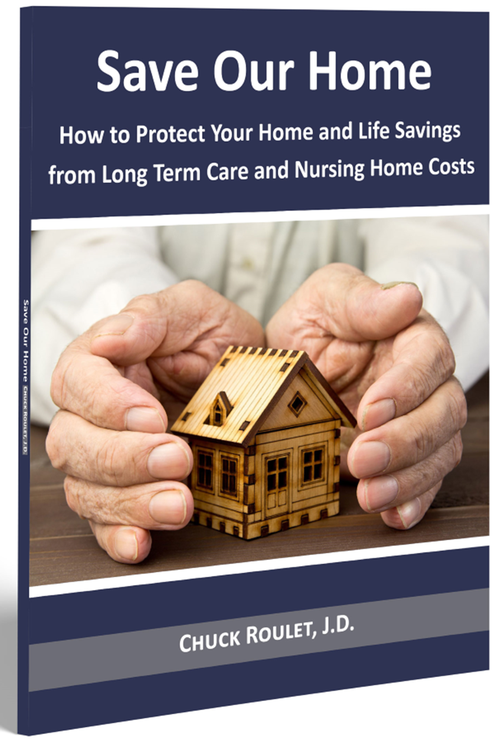
Free Resource: Download "Save Our Home"
Our free guide walks through exactly how families protect their home and savings from long-term care and nursing home costs — including strategies most families never hear about until it is too late. Click here to download your free copy.
Free Online Masterclass
Register for our free estate planning masterclass to learn the strategies Chuck uses with his private clients to avoid probate, reduce taxes, and protect family wealth. Click here to register.
Chuck Roulet is an estate and elder law planning attorney at Roulet Law Firm, P.A., with offices in Minnetonka, Minnesota and Venice, Florida. He is licensed in both states and has nearly 30 years of experience helping families protect their homes, life savings, and legacies.
This page is for informational purposes only and does not constitute legal advice. Please consult a licensed attorney about your specific situation.